
CIDER - Clothing & Fashion
Cider GlobalShopping
4.71.10K Reviews
- Version
- 3.54.1
- Installs
- 10.00M
- Age Rating
- Everyone
Screenshots




Our Review of CIDER - Clothing & Fashion
 Analysis by Appyee
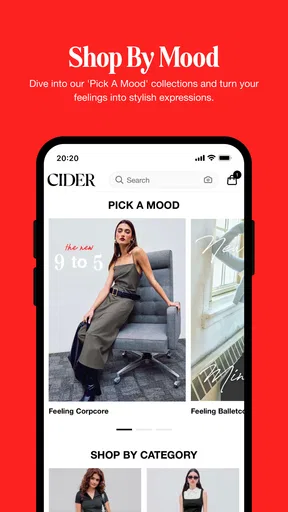
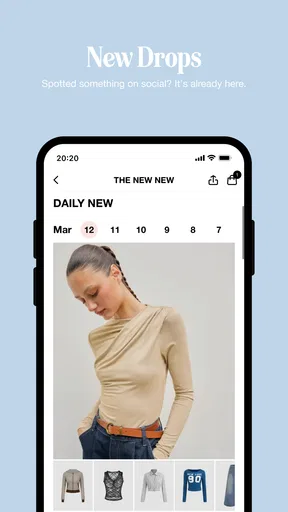
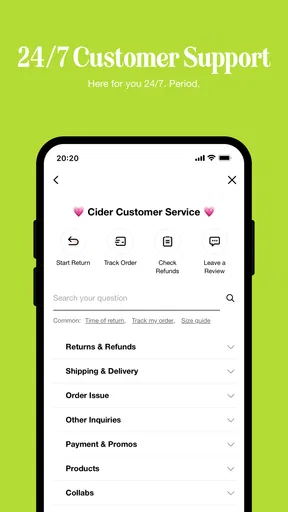
I opened CIDER with a familiar shopping problem: I wanted a new outfit that felt more current than my usual basics, but I did not want to spend an afternoon moving between different stores. That starting point explains the app better than its cheerful “closet” idea. It is a fashion-shopping app from Cider Global, designed for browsing clothing and building a look from a phone rather than treating shopping like a quick search for one isolated item.
My first impression was that the app is strongest when I already have a visual direction in mind. I can arrive looking for a relaxed weekend outfit, a going-out top, or a particular style of skirt and then let the catalog narrow the possibilities. It is less useful when I need a very exact garment with strict requirements and no patience for browsing. In that situation, a conventional retailer with clearer product filtering or a marketplace with more established brand information may be a better fit.
The app is free, aimed at everyone, and available for devices running Android 7.0 or later. Its current version is 3.54.1, and its scale is easy to understand from the store presence: it has passed ten million installs, with a 4.7 average from roughly thirty-six thousand ratings. Those figures suggest that Cider has become a familiar destination for mobile fashion shoppers, although popularity does not remove the need to check each item carefully before ordering.
From outfit idea to a focused shopping trip
I find it helps to give a browsing session a clear purpose before opening the catalog: an occasion, a color, or one missing piece can turn a vague scroll into a useful shortlist. In this section, I’ll focus on how I narrow the options without losing the fun of exploring. From there, I’ll look at what changes when a quick browse becomes a longer shopping session.
Beginning with a vague need
The most realistic way to use Cider is not to open it with a completely blank mind. I get better results when I begin with a small brief: “I need something for a warm evening,” “I want a softer alternative to jeans,” or “I need one statement piece and simple items around it.” That approach prevents the endless-scroll problem common to visual fashion apps. Instead of judging every garment independently, I can ask whether a piece belongs in the outfit I am trying to create.
This matters because the app encourages discovery. A user who enjoys seeing related styles and changing direction while browsing will probably feel at home. Someone who wants to enter a model number, compare identical products, and leave immediately may find the experience less efficient. Cider sits closer to a digital fashion storefront and inspiration board than to a plain utility for replenishing wardrobe staples.
I also recommend deciding what matters most before browsing: silhouette, color, occasion, or budget. If I start with all four at once, the number of appealing options can make the session feel productive while quietly making the decision harder. Choosing one priority first gives the rest of the process some structure.
Turning browsing into selection
Once I see an item I like, I do not treat the first image as enough evidence. I move through the available product presentation, inspect the garment from different angles, and read the written details before becoming attached to the styling. A photographed outfit can suggest how a piece might look, but it does not replace checking the shape, fabric information, available options, and size guidance shown for that particular listing.
My most useful habit is to compare the item with clothing I already own. I ask whether I have shoes that work with it, whether the cut fills a real gap, and whether I would wear it in more than one setting. This is especially important in an app built around trend-led discovery. A low-cost-looking impulse can become a poor purchase if it only works in the exact image that first caught my attention.
I save promising pieces mentally or through the app’s available shopping controls rather than adding everything immediately. That creates a short review stage. After browsing several options, I return to the strongest candidates and remove anything that duplicates an item I already have. This small pause is one of the best ways to make the app feel like a shopping tool instead of a stream of temptations.
Building a complete look
Cider becomes more useful when I shop by outfit rather than by isolated product. I might begin with a top, then look for a bottom with a compatible proportion, and finally check whether a layer or accessory makes the combination practical. The advantage is not that the app magically solves styling; it is that its fashion-focused environment keeps me thinking in coordinated pieces.
There is a trade-off here. Outfit-based browsing can help someone who normally struggles to imagine combinations, but it can also encourage buying more than originally planned. I handle that by setting a limit on the number of categories I will consider in one session. For example, I might choose one main garment and allow myself to inspect only one supporting category. That keeps the creative part without turning every recommendation into a reason to expand the basket.
A second useful technique is to separate “interesting” from “wearable.” I keep the unusual item if it adds something genuinely different, but I test it against ordinary clothes in my wardrobe. If it needs several new purchases before it makes sense, it is no longer a simple addition. That distinction helps me use Cider for experimentation without losing sight of everyday value.
Checking the handoff from screen to order
The important handoff happens when an attractive image becomes a real purchase decision. At that point, I slow down and review the selected items together. I check the chosen variation, size information, and the final basket details rather than assuming that the option I first viewed is the one I am about to buy. This is a basic step, but fashion apps make it easy to move quickly from inspiration to checkout.
I also treat the basket as a planning document. If two items serve the same role, I remove the weaker one. If the outfit depends on a piece that I am uncertain about, I reconsider the entire combination instead of hoping the uncertainty will disappear after ordering. This is where the app’s convenience can either help or hurt: it makes discovery fast, but the responsibility for a careful final decision remains with me.
For a first order, I would avoid filling the basket with many experimental pieces. A smaller test gives me a clearer sense of how well the product presentation translates into something I would actually wear. It also makes it easier to identify which part of the experience worked for me: the style selection, the browsing flow, or the individual garment.
What happens after the shopping decision
The app is only one part of the shopping handoff. After I choose, the outcome depends on the item details, the order process, and what happens when the clothing is no longer a picture on a screen. I therefore keep expectations practical. Cider can help me discover a look and organize a purchase, but it cannot remove the normal uncertainty of buying clothing without trying it on first.
That uncertainty is the main reason I would not recommend treating every listing as interchangeable. Two garments that look similar in a feed can feel very different because of their cut, material, or construction. I read the information attached to the exact item and keep my decision tied to that listing, not to a similar-looking image elsewhere in the app.
When the purchase is intended for a specific date, I would also avoid leaving the decision until the last possible moment. The app is suited to planning and discovery; it is not the right place to take unnecessary timing risks when a dependable local store would solve the problem more safely.
The result: when Cider earns a place on my phone
The best result I get from Cider is a more focused version of fashion browsing. I can start with an occasion, assemble a visual direction, discard weak options, and finish with a basket that reflects an actual outfit rather than a random collection of attractive thumbnails. That workflow is particularly useful for people who enjoy style experimentation but want the convenience of doing it from a phone.
It is also a reasonable option for someone who feels overwhelmed by traditional online stores. A large general retailer may offer more household categories, more familiar labels, or a more practical search-first experience. Cider feels more concentrated on fashion discovery, so the browsing session can be more enjoyable when inspiration is part of the goal.
Compared with secondhand marketplaces, the experience is different in an important way. A resale app can be better when I want a specific brand, a unique older piece, or the possibility of finding an item with an existing history. Cider is more appropriate when I want to explore a coordinated contemporary look without depending on one seller’s individual listing. Neither approach is automatically better; they serve different shopping intentions.
Compared with a physical shop, Cider gives me more time to reconsider and compare without pressure from a fitting-room queue or a salesperson. The cost is that I cannot immediately judge the fabric, weight, or fit on my body. For basics where tactile certainty matters more than novelty, I may prefer visiting a store or using a retailer whose sizing and product information I already know well.
Where the flow breaks
The first weak point is decision fatigue. A visually appealing catalog can make browsing feel effortless at first, then leave me with too many plausible choices. The solution is not simply to scroll faster. I get better results by creating a shortlist, taking a break, and returning with a specific question: which item works with the most clothes I already own?
The second weak point is the gap between styling and reality. A polished image communicates mood very effectively, but mood is not the same as fit. If I am highly sensitive to fabric feel, exact tailoring, or precise proportions, I would choose a shopping route that lets me inspect or try garments more directly. Cider can support a confident decision, but it cannot substitute for physical evaluation.
The third is impulse control. The app is good at making a new style feel immediately relevant. That is useful when I want to break out of a wardrobe rut, yet it can encourage me to buy for the imagined version of my life rather than my actual routine. I now ask whether I can name at least two occasions for a piece before keeping it in consideration.
There is also a practical limitation for highly exact shopping missions. If I need a formal item with a very specific construction, a dependable workwear staple, or a replacement for something I already own, a more specialized retailer may offer a clearer path. Cider is at its best when I am open to discovering a look, not when I have no flexibility at all.
Who should try it, and who should skip it
I would recommend Cider to a shopper who enjoys visual browsing, wants to refresh a wardrobe, and is willing to inspect item details before committing. It is especially useful for planning an outfit around an occasion, testing a new style direction, or finding pieces that feel more expressive than standard basics. The free entry point makes it easy to explore without treating the first session as a major commitment.
I would be more cautious recommending it to someone who dislikes scrolling, needs guaranteed fit, or wants a very fast replacement purchase. I would also point a highly budget-disciplined shopper toward a more deliberate process before opening the app: make a list, set a spending ceiling, and decide which existing clothes the new item must work with. Without that preparation, the discovery element can become the main event.
The Everyone age rating makes the app broadly accessible, but accessibility is not the same as suitability for every shopping style. Younger users may enjoy the visual variety, while adults shopping for dependable wardrobe essentials may find a conventional retailer more efficient. The right choice depends less on age than on whether the user wants inspiration or certainty.
My final take after following the full workflow
Cider Global has made an app that works best as a fashion-discovery companion. I can enter with a vague outfit idea, shape it through browsing, pass from inspiration to a considered basket, and leave with a clearer sense of what I actually want. That is more valuable than simply having a large selection, because it gives the shopping session a creative purpose.
Still, I would not use it on autopilot. The strongest experience comes from checking the exact item information, comparing each choice with my existing wardrobe, and accepting that online images cannot answer every fit or fabric question. Those extra minutes are the difference between finding a useful addition and collecting something that only looked right in the feed.
Released on September 29, 2020, the app has had time to establish itself, and its current version shows that it remains an active option for mobile fashion shopping. My honest recommendation is simple: try it when you want to explore a look and enjoy the process, but choose a more specialized or hands-on alternative when precision matters more than discovery. Used with that distinction in mind, CIDER is a pleasant, focused way to turn an outfit idea into a real shopping plan.
Verdict
Strengths of CIDER - Clothing & Fashion
- Wide selection of clothing, shoes, and accessories in one app.
- Frequent discounts and promotions can make trendy items more affordable.
- Product photos make it easy to compare styles before buying.
- Useful filters help narrow down items by size, color, and category.
- Suitable for discovering independent and emerging fashion brands.
Limitations of CIDER - Clothing & Fashion
- Sizing may vary noticeably between different brands and sellers.
- Some items may have limited stock or sell out quickly.
- Shipping times can differ depending on the seller and destination.
- Returns may involve separate policies for individual marketplace sellers.
- Product quality may not always match the appearance in listing photos.
Similar Picks in This Category
View All
SHEIN-Shopping Online
Roadget Business PTE. LTD.4.8

Amazon Shopping
Amazon Mobile LLC4.4


Mercado Libre: Compras online
Mercado Libre4.8

Wish: Shop and Save
Wish US Holdings LLC4.7

Alibaba.com - B2B marketplace
Alibaba Mobile4.4
Frequently Asked Questions
What is CIDER - Clothing & Fashion, and what can I buy through the app?
CIDER is a fashion shopping app focused on trend-led clothing, accessories, and lifestyle items for women and other style-conscious shoppers. After exploring the catalog, users can browse categories, view product photos and descriptions, check available sizes and colors, save items, and place orders directly from their phone. The selection and availability may change regularly as new collections and seasonal products are added.
Is CIDER - Clothing & Fashion safe to use for shopping and payments?
The app is designed to provide a standard mobile shopping experience, including account creation, product browsing, checkout, and order tracking. Before entering payment details, users should download CIDER from an official app store, review the requested permissions, and confirm that the checkout page uses a secure connection. Payment methods, security features, and availability can vary depending on your country and the current version of the app.
How do sizing, product quality, and customer reviews work on CIDER?
Sizing can vary between products, so it is important not to rely only on your usual size. Product pages generally provide a size guide, measurements, material information, photos, and sometimes customer feedback. We recommend comparing the listed measurements with clothing you already own and reading reviews carefully, especially comments about fit, fabric, transparency, and appearance. Photos and colors may also look slightly different on different screens.
How long does CIDER delivery take, and can I track my order?
Delivery times depend on the destination, shipping option, product availability, warehouse processing, and periods of high demand. The estimated timeframe is normally shown during checkout or in the order details. Once an order is dispatched, the app may provide tracking information so you can follow its progress. Customs procedures, weather, holidays, or carrier delays can affect the final delivery date, particularly for international orders.
What is CIDER’s return and refund policy?
Before ordering, check the return and refund terms that apply to your country, because eligibility, deadlines, shipping costs, exclusions, and refund methods may differ. Items usually need to meet specific condition requirements, and certain products may not be returnable for hygiene or clearance reasons. Keep your order information and packaging until you are satisfied, then use the app’s support or return process if an item is unsuitable.
